When to get help
When do-it-yourself isn't enough
A tool you built in an hour can be genuinely useful. Over time, though, it may start carrying more weight than it was built for. Here's how to tell, honestly, and what to do about it.
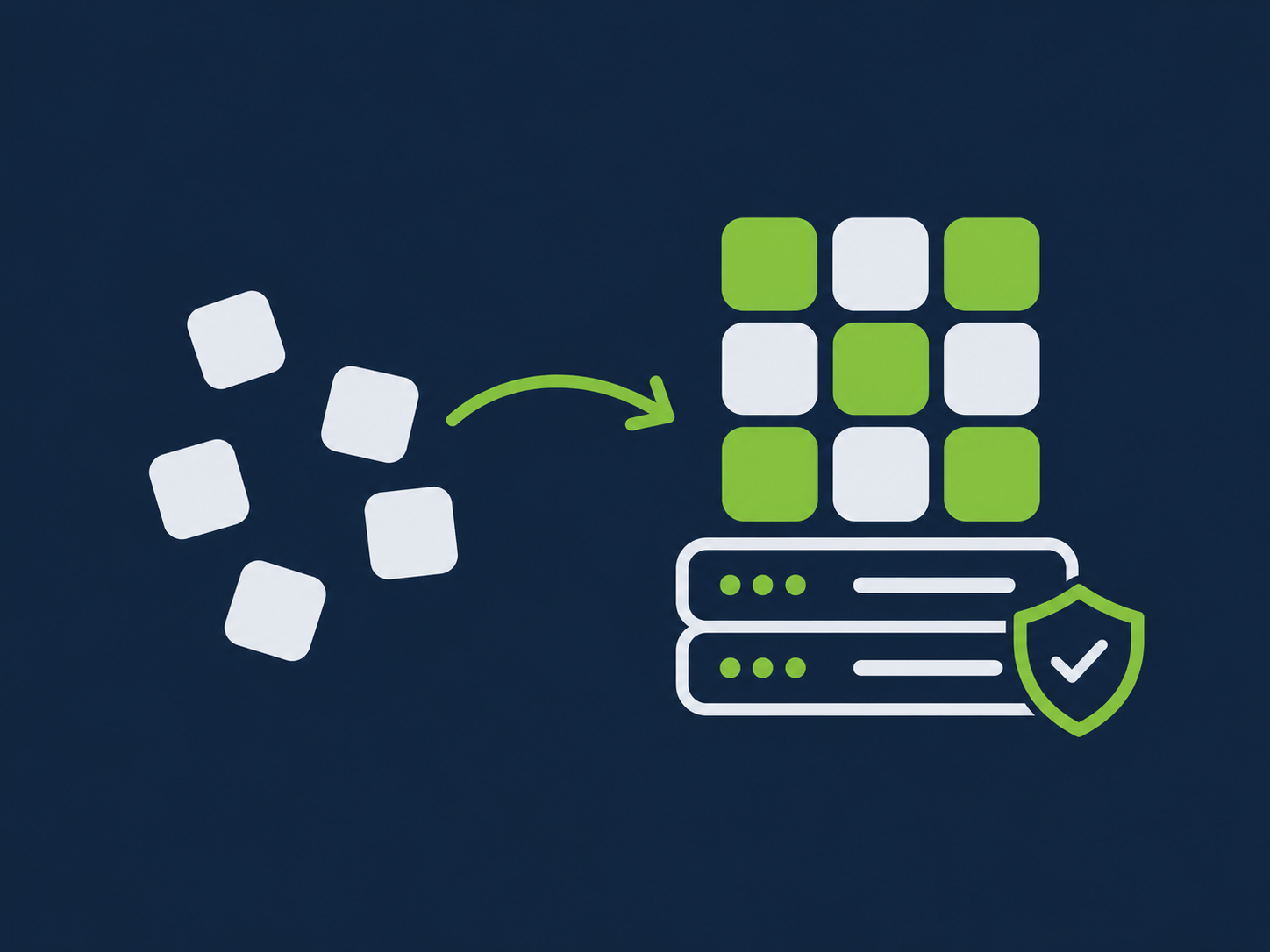
Signs a tool has outgrown do-it-yourself
One of these on its own may be fine. Two or three together usually mean it's time.
More people use it
It started as yours. Now a team uses it, and you're thinking about sign-ins and who can change what.
It holds sensitive data
Customer, financial or employee information is going into it, or being stored by it.
The business depends on it
If it broke on a Monday morning, work would stop until someone fixed it.
It needs to connect
It has to talk to your accounting, your CRM or other systems, not just stand alone.
Only one person understands it
The person who built it is the only one who can change it, and they're busy.
Infrastructure and security: the two big reasons
These are hard to get right in an hour, and easy to get wrong without noticing.
Infrastructure
- Hosting that stays up when people need it
- Backups you've actually tested
- Somewhere to keep data that isn't one laptop
- Updates and monitoring as it grows
Security
- Sign-ins and the right permissions for each person
- Data protected where it's stored and as it travels
- Software components kept patched
- A record of who changed what, and when
A word for large companies
If you work at a large enterprise, don't build software the company relies on with an AI agent. The risks to data, security and the business are too high for a do-it-yourself tool.
There can be narrow, reasonable uses within your company's AI policy. A decision tool can make a recurring call consistent. A prototype can show exactly what you mean, and give a professional team a clear picture of what to build properly.
It's fine to keep it small
Plenty of tools never need to grow up. If one person uses it, it holds nothing sensitive, and you could rebuild it in an hour if it broke, keep it as it is. A do-it-yourself tool that does its job is a good outcome, not a problem to fix.
How Software KC takes it from there
From a tool that works to a product you can rely on
Tell us what you have
The tool or the idea, who uses it, and what it needs to do.
Get an honest view
We'll tell you what it needs, including when the honest answer is that it doesn't need us yet.
We build it properly
Infrastructure and security included by default, hosted by us or delivered to you.